

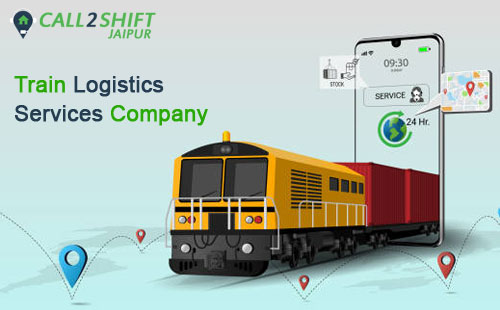
Anyone who has managed freight movement across India for a while eventually notices something that doesn’t get talked about enough. Trucks dominate conversations, air freight grabs attention because of speed, but rail is quietly doing the heavy lifting in the background.
Table of Contents
- Why Rail Freight Still Matters in Modern Logistics
- What Rail Freight Looks Like in Real Operations
- Why High-Volume Cargo Naturally Moves Toward Rail
- Rail Logistics and the Indian Freight Landscape
- The Real Cost Advantage Appears at Scale
- Reliability Often Matters More Than Speed
- The Sustainability Factor Companies Are Beginning to Notice
- When Rail Logistics Becomes the Smart Option
- Conclusion
A dependable train logistics services company isn’t just arranging wagons on a railway line. The real work is solving a practical problem that every logistics manager runs into sooner or later: moving large cargo volumes over long distances without letting transport costs spiral out of control.
Many businesses only start thinking about rail when road freight becomes painfully expensive or when trucks begin losing time on crowded highways. By that stage, rail looks like a rescue option.
In reality, experienced logistics planners usually think about it earlier than that.
When the distance between origin and destination starts crossing multiple states, rail stops being an alternative and begins acting as a structural part of the supply chain.
Why Rail Freight Still Matters in Modern Logistics
One of the more common misunderstandings about rail transport is that it’s slow or outdated. That assumption usually comes from comparing freight trains with passenger trains, which is not really a fair comparison.
Freight operations follow a completely different logic.
Passenger trains prioritize timetable precision for travelers. Freight trains focus on moving large volumes efficiently. Once a route is established and container capacity is organized, the system tends to run with surprising consistency.
A train logistics services company works around that structure.
Instead of sending dozens of trucks across the country carrying fragmented cargo, rail allows shipments to move in consolidated container blocks. One train effectively replaces a long chain of highway vehicles.
For companies shipping goods between manufacturing hubs like Delhi, Mumbai, Ahmedabad, or Chennai, that consolidation changes the economics of transport very quickly.
Fuel costs spread across a much larger cargo load, which is where rail begins to outperform road-only logistics.
What Rail Freight Looks Like in Real Operations
From a distance, rail transport looks almost too simple. Containers get loaded, the train departs, and the cargo eventually shows up somewhere else.
Behind the scenes it’s more coordinated than that.
A train logistics services company normally starts working before the cargo even reaches a railway terminal. Goods move from the factory or warehouse to an inland container depot where the shipment gets inspected, documented, and sealed.
Only after that preparation does the cargo enter the rail network.
The train carries the containers across long corridors connecting major freight regions. When the shipment reaches the destination terminal, trucks step in again to complete the final delivery.
So rail freight rarely operates alone.
Most long-distance rail logistics solutions rely on this combination of road and rail. Trucks handle the first and last mile while trains carry the long central portion of the journey.
That combination is what makes rail surprisingly efficient.
Why High-Volume Cargo Naturally Moves Toward Rail
Not every shipment belongs on a train.
If a company is sending a few pallets to a nearby city, trucking will almost always remain the simpler option. Rail becomes interesting when cargo volume begins increasing or when the distance becomes substantial.
Industrial materials, automotive components, construction goods, and containerized consumer products often move well through train logistics services because they benefit from scale.
Once shipments start covering distances above roughly 800–1000 kilometers, logistics managers usually start evaluating rail seriously.
That’s where affordable train shipment services begin to show real value.
The transport cost per ton drops noticeably, especially when shipments are consolidated into containers.
Rail Logistics and the Indian Freight Landscape
India’s railway network is massive, yet many businesses still default to road transport simply because it feels familiar.
A professional rail logistics company in India often plays the role of translator between businesses and the railway system.
Rail terminals have their own procedures, booking processes, and scheduling constraints. For companies unfamiliar with the system, that complexity can feel intimidating.
Logistics providers remove most of that friction.
They handle container allocation, rail scheduling, documentation, and the truck connections needed to move cargo to and from terminals. From the client’s perspective, the shipment simply moves from origin to destination.
Under the surface, however, multiple logistics layers are working together.
The Real Cost Advantage Appears at Scale
One thing that sometimes confuses businesses is pricing.
Rail isn’t automatically cheaper for every shipment. For small cargo loads or short distances, road freight can still be competitive.
Where rail begins to dominate is in scale.
A capable train logistics services company can consolidate shipments from several clients into shared containers. That allows companies to access affordable train shipment services without needing to fill an entire wagon themselves.
For medium-sized companies expanding into new regions, that model makes rail logistics far more accessible than it used to be.
Reliability Often Matters More Than Speed
People often assume faster transport automatically means better logistics. In practice, many industries value predictability more than raw speed.
Manufacturing is a good example.
Factories rely on raw materials arriving within a fairly narrow production window. If shipments show up too early or too late, it can disrupt production scheduling.
Rail freight tends to offer steady transit timing once routes are established.
That consistency is one of the reasons long-distance rail logistics solutions continue supporting large manufacturing and distribution networks across India.
The Sustainability Factor Companies Are Beginning to Notice
Environmental impact wasn’t traditionally part of logistics planning, but that is slowly changing.
Large companies now measure supply chain emissions as part of their sustainability commitments. Transport plays a noticeable role in those calculations.
Rail freight produces significantly lower emissions per ton compared with road transport.
Using a train logistics services company can therefore reduce fuel consumption and environmental impact for shipments traveling long distances.
For organizations paying closer attention to sustainability metrics, that advantage is becoming increasingly relevant.
When Rail Logistics Becomes the Smart Option
In day-to-day logistics planning, the decision to use rail usually depends on three practical factors:
- shipment distance
- cargo volume
- delivery flexibility
If cargo needs to travel across several states, involves containerized goods, and doesn’t require immediate delivery, rail usually becomes a sensible option.
A capable train logistics services company helps businesses identify exactly where rail fits into their distribution strategy instead of forcing it into situations where it doesn’t belong.
Strong supply chains rarely rely on a single transport method. They combine road, rail, air, and sea based on what each mode does best.
Rail simply happens to excel at long-distance bulk movement.
Conclusion
Rail freight doesn’t attract the same attention as trucking or air cargo, but it quietly carries a large share of industrial goods across the country.
A dependable train logistics services company is not just moving containers along railway tracks. It is building stable transport corridors between production centers, warehouses, and regional markets.
For businesses shipping goods across long distances, rail logistics provides something that modern supply chains increasingly value: predictable movement at scale.
As rail infrastructure continues improving, the role of professional train logistics services will likely become even more significant.
Companies that integrate rail into their logistics strategy early often find it becomes one of the most reliable parts of their entire distribution network.
 Call Us
 Send Query
 Chat Now